Quick answer: A flat foot needs surgery only when it is painful and getting worse despite 3 to 6 months of orthotics, bracing and physical therapy. Five warning signs point that way: lasting pain on the inside of the ankle, being unable to rise onto the toes of one foot, an arch that keeps collapsing, pain moving to the outside of the ankle, and a foot that has become stiff or arthritic. A painless, flexible flat foot does not need surgery.
Link: For the causes and stages of adult flatfoot, read Flat Feet in Adults.
Many people have flat feet their whole life without a single day of pain. A flat foot by itself is not a disease. The problem is a foot that is painful and collapsing over time, a condition now called progressive collapsing foot deformity (also known as adult acquired flatfoot).
What causes a flat foot to collapse in adulthood?
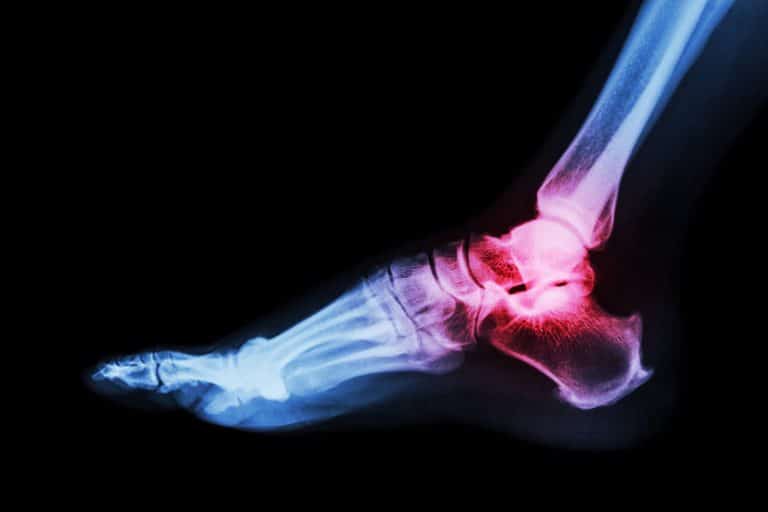
The most common cause is wear of the posterior tibial tendon, the main tendon that holds up the arch. As it weakens, the heel tilts outward, the arch drops and the forefoot drifts out. Ligaments that support the arch stretch out as well. Without treatment, a flexible deformity can become stiff and arthritic.
When should flat feet be treated with surgery?
Surgery is worth discussing when one or more of these is true:
- Pain on the inside of the ankle persists after 3 to 6 months of orthotics, bracing and physical therapy
- You can no longer rise onto the toes of one foot (a single-leg heel rise)
- The arch keeps collapsing on serial X-rays or photos
- Pain moves to the outside of the ankle, a sign that bones are starting to impinge
- The foot has become stiff, or arthritis has developed in the hindfoot joints
A painless, flexible flat foot does not need surgery.
What does flatfoot surgery involve?
For a flexible foot, surgery usually rebuilds the arch while keeping the joints: shifting the heel bone back under the leg, repairing or replacing the failing tendon, and lengthening a tight calf. For a rigid or arthritic foot, the hindfoot joints are fused (a double or triple arthrodesis) to create a stable, pain-free platform.
How has minimally invasive surgery changed flatfoot reconstruction?
Traditional flatfoot reconstruction relies on long incisions over the heel and the side of the foot. Wound healing is one of its weak points, especially in patients with diabetes, smoking history or swelling.
With minimally invasive surgery (MIS), the heel bone can be shifted and the joints prepared for fusion through tiny incisions. Our own research shows patients get the same correction and pain relief as with open surgery, with far fewer wound problems.
The practical advantages are less soft-tissue trauma, less pain, smaller scars and a lower risk of wound complications.
Frequently asked questions
Can flat feet be fixed without surgery?
Most painful flat feet improve with custom orthotics, bracing, calf stretching and physical therapy. Surgery is reserved for cases that fail these measures.
What happens if a collapsing flat foot is not treated?
The deformity can become rigid and arthritic, which leaves fusion as the main option. Earlier treatment often preserves more joints.
Is minimally invasive flatfoot surgery as effective as open surgery?
Yes. Results are just as good, with smaller scars and fewer wound complications.
Dr. Ettore Vulcano treats adult flatfoot with both traditional and minimally invasive techniques at Mount Sinai Medical Center, Miami Beach.
Reference: Fiore et al. Comparing patient reported outcomes and complications following open versus minimally invasive double and triple arthrodesis for rigid flatfoot deformity. Foot Ankle Surg. 2025. doi:10.1016/j.fas.2025.12.006
Medical disclaimer: This article is for general educational purposes only and is not medical advice. Reading it does not create a doctor–patient relationship. Every patient is different, and treatment options, recovery and results vary from person to person. Please consult a qualified physician about your specific condition before making any treatment decisions. If you are experiencing a medical emergency, call 911.
Written and medically reviewed by Ettore Vulcano, MD. Last reviewed: November 2026.
Related reading: Ankle Fusion or Ankle Replacement: Which Patient Fits Which Surgery? | Minimally Invasive Brostrom: Repairing Ankle Ligaments Through 3 Tiny Incisions