
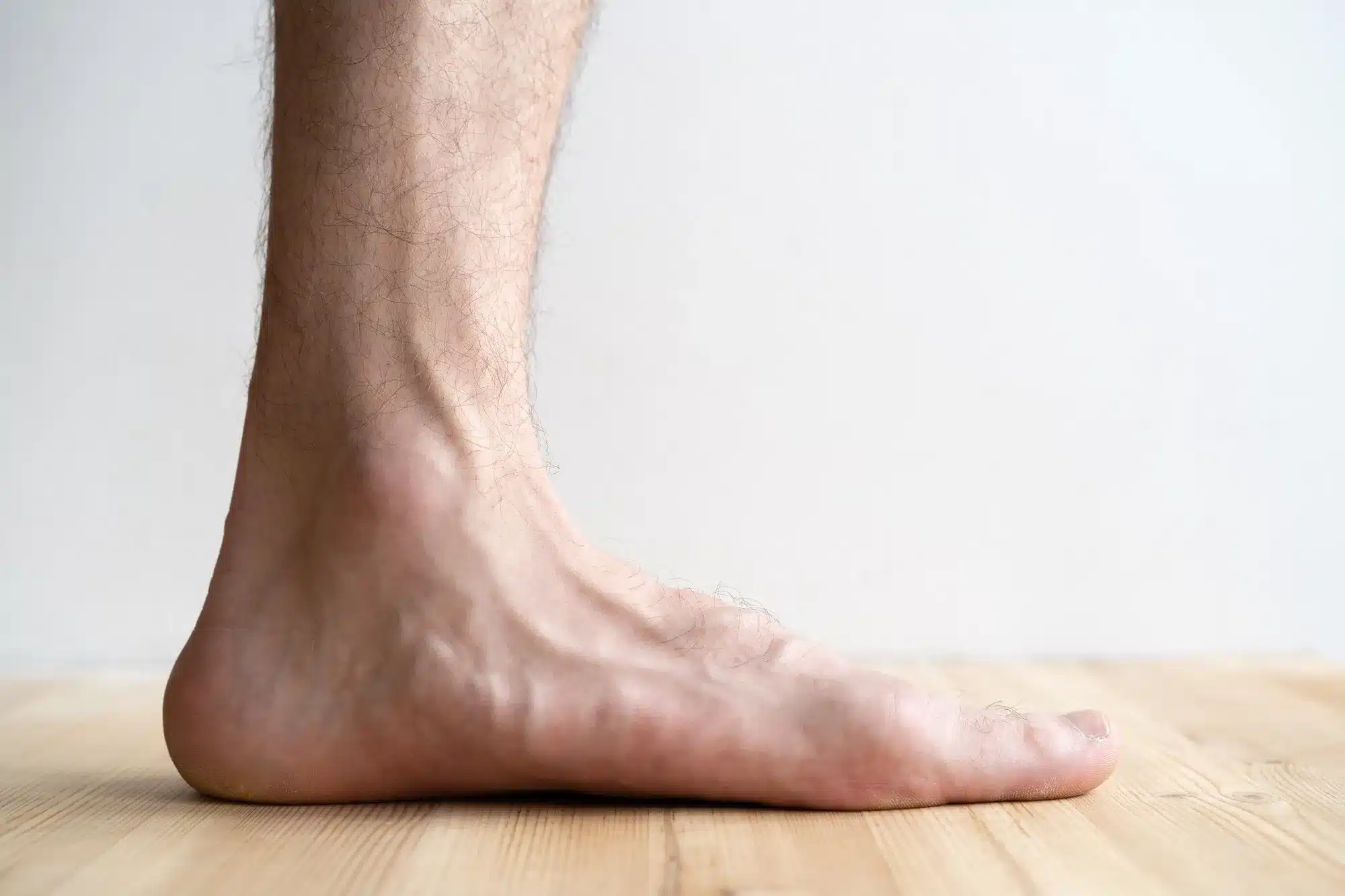
Flatfoot Treatment and Flatfoot Surgery with Advanced Foot Arch Reconstruction
Flatfoot can cause discomfort, instability, and changes in walking mechanics due to a collapsed arch. Modern flatfoot treatment includes supportive therapies like ankle support for flat feet as well as advanced flat foot reconstruction surgery when needed. Our approach to foot arch reconstruction and flatfoot surgery Miami focuses on correcting alignment, improving function, and reducing pain using precise surgical techniques tailored to each patient’s condition.
What is Flatfoot?
Flatfoot (also called pes planus or adult acquired flatfoot deformity) is a condition where the arch of your foot collapses or flattens, causing the entire sole of your foot to come into complete or near-complete contact with the ground when you stand. While many people have flat feet without any problems, flatfoot can become painful and progressive in some individuals, leading to significant disability if left untreated.
The condition is now often referred to as Progressive Collapsing Foot Deformity (PCFD) because it emphasizes that this is an active, worsening problem rather than just a static foot shape.
What Causes Flatfoot?
Adult acquired flatfoot deformity most commonly develops due to degeneration of the posterior tibial tendon—a critical tendon that runs along the inside of your ankle and helps support the arch of your foot. This tendon normally functions to maintain the alignment of the bones at the top of your foot’s arch.
When the posterior tibial tendon weakens or tears, it can no longer properly support the arch, leading to progressive flattening. This tendon dysfunction commonly leads to secondary damage of other important supporting structures, including the spring ligament, ligaments around the heel bone, and the plantar fascia.
Risk Factors
Several factors increase your risk of developing flatfoot:
-
Age: Most common in middle-aged and elderly adults, particularly women
-
Obesity: Excess body weight increases stress on the foot structures
-
Diabetes: Can affect tendon health
-
Hypertension: Associated with tendon degeneration
-
Previous foot or ankle injuries
-
Inflammatory conditions: Such as rheumatoid arthritis
-
Tight calf muscles: Limited ankle flexibility increases stress on the arch
What Are the Symptoms?
Flatfoot causes distinctive symptoms that typically develop gradually:
Pain and Discomfort
-
Pain along the inside of the foot and ankle, especially where the posterior tibial tendon runs
-
Pain in the outer side of the ankle (sinus tarsi region)
-
Pain that worsens with activity, especially walking or standing for long periods
-
Swelling along the inside of the ankle
Visible Changes
-
Flattening of the arch when standing
-
The heel bone tilts outward (you can see “too many toes” when looking at the foot from behind)
-
The front of the foot turns outward
-
Difficulty standing on your tiptoes or raising your heel off the ground on the affected side
Functional Problems
-
Difficulty walking, especially on uneven ground
-
Fatigue in the foot and leg
-
Problems with balance and stability
-
Abnormal shoe wear patterns
-
Difficulty fitting into regular shoes
Recent research has shown that peritalar subluxation—where the bones around the ankle joint shift out of their normal position—is the main driver of symptoms that distinguishes painful flatfoot from asymptomatic flat feet.
How is Flatfoot Diagnosed?
Your foot and ankle surgeon will diagnose flatfoot through:
Physical Examination
-
Observing your foot alignment while standing and walking
-
Checking your ability to rise up on your toes (single-leg heel raise test)
-
Examining the flexibility of your foot
-
Assessing the strength and integrity of the posterior tibial tendon
-
Evaluating ankle range of motion and calf muscle tightness
Imaging Studies
-
Weight-bearing X-rays: Show the alignment of your foot bones and the degree of arch collapse
-
MRI: May be used to evaluate tendon damage and ligament injuries
-
Advanced imaging: Weight-bearing CT scans can provide detailed 3D information about bone alignment and joint subluxation
Stages of Flatfoot
Flatfoot is classified into stages based on the severity of the deformity:
-
Stage I: Posterior tibial tendon inflammation with pain but no visible deformity
-
Stage II: Flexible flatfoot deformity that can be corrected manually; the most common stage requiring surgery
-
Stage III: Rigid flatfoot deformity that cannot be corrected manually; arthritis may be present
-
Stage IV: Flatfoot with ankle arthritis and tilting of the ankle joint
Non-Surgical Treatment Options
Most patients initially try conservative (non-surgical) treatments:
-
Rest and activity modification: Avoiding activities that worsen pain
-
Supportive footwear: Shoes with good arch support and a firm heel counter
-
Orthotics: Shoe inserts that support the arch and control foot motion
-
Physical therapy: Stretching exercises for tight calf muscles and strengthening exercises for foot muscles
-
Bracing: Ankle-foot orthoses (AFO) for more severe cases
-
Anti-inflammatory medications: To reduce pain and swelling
-
Weight loss: If applicable, to reduce stress on the foot
When to Consider Surgery
Surgery is considered when:
-
Pain persists despite 3-6 months of appropriate conservative treatment
-
The deformity is progressive and worsening
-
Pain significantly limits your daily activities and quality of life
-
You are unable to wear regular shoes comfortably
-
Conservative treatments no longer provide adequate relief
Minimally Invasive Surgical Treatment Options
Modern surgical techniques for flatfoot increasingly use minimally invasive approaches that offer significant advantages over traditional open surgery, including smaller incisions, less pain, faster recovery, reduced infection risk, and better cosmetic results.
Modern flatfoot surgery increasingly uses minimally invasive techniques, which involve smaller incisions, less tissue damage, and faster recovery compared to traditional open surgery.
Flatfoot Reconstruction
Flatfoot reconstruction is surgery to correct a collapsed arch by realigning bones, repairing tendons and ligaments, and restoring a functional foot. Contrarily to a fusion of the foot (see following section), a reconstruction does not eliminate range of motion of the foot.
Common Minimally Invasive Procedures
Heel Bone Realignment (Calcaneal Osteotomy) The heel bone is shifted to restore proper alignment and reduce stress on the arch.
Calf Muscle Lengthening (Gastrocnemius Recession) Tight calf muscles are lengthened to improve ankle motion and reduce arch strain.
Arch and Tendons Corrections Bone cuts and tendon transfers are used to restore arch height and foot balance.
Combined Procedures Most patients require a customized combination of procedures to fully correct the deformity.
Outcomes Studies on minimally invasive flatfoot reconstruction show:
-
Excellent functional improvement
-
Significant radiographic correction of all deformity parameters
-
Low complication rates
-
High patient satisfaction
-
Faster recovery than traditional open techniques
Recovery
-
Non-weight-bearing period: 6 weeks
-
Transition to weight-bearing in a boot: 8-12 weeks
-
Return to regular shoes: 3 months
-
Full recovery: 12 months
Minimally Invasive Arthrodesis (Fusion) for Advanced Flatfoot
For patients with Stage III flatfoot (rigid deformity with arthritis), minimally invasive fusion techniques are available.
What It Is Arthrodesis involves fusing (permanently joining) one or more joints in the foot to correct the deformity and eliminate painful arthritic joints. Common fusions include:
-
Double arthrodesis: Fusion of the subtalar and talonavicular joints
-
Triple arthrodesis: Fusion of the subtalar, talonavicular, and calcaneocuboid joints
Minimally Invasive Technique Modern approaches use:
-
Multiple small incisions instead of large open incisions
-
Specialized instruments for joint preparation
-
Percutaneous (through the skin) screw placement
-
Fluoroscopic guidance for accurate positioning
Advantages
-
Smaller incisions reduce soft tissue trauma
-
Lower infection risk: Minimal wound complications
-
Reduced pain compared to open techniques
-
Faster bone healing
-
Excellent cosmetic results
Recovery
-
Non-weight-bearing period: 6 weeks
-
Transition to weight-bearing in a boot: 8-12 weeks
-
Return to regular shoes: 3 months
-
Full recovery: 12 months
Frequently Asked Questions
What is flatfoot and how does it affect the foot?
Flatfoot occurs when the arch of the foot collapses, causing the sole to make more contact with the ground. This condition can lead to pain, instability, and changes in walking mechanics, often requiring proper flatfoot treatment to improve function and comfort.
When is flatfoot surgery recommended?
Flatfoot surgery may be recommended when conservative treatments like orthotics or ankle support for flat feet fail to relieve symptoms. Surgical correction focuses on restoring alignment and improving long-term stability.
What is flat foot reconstruction surgery?
Flat foot reconstruction surgery involves procedures such as tendon repair and foot arch reconstruction to correct deformity and restore proper foot structure. The goal is to reduce pain and improve mobility.
How long is recovery after flatfoot surgery?
Recovery after flatfoot surgery varies depending on the procedure, but most patients follow a structured rehabilitation plan. Bone healing and functional improvement occur gradually, with continued progress over several months.
Are non-surgical flatfoot treatment options available?
Yes. Many patients benefit from non-surgical flatfoot treatment including physical therapy, orthotics, footwear changes, and ankle support for flat feet before considering surgery.
Medical Disclaimer
The information provided on this website is intended for general educational and informational purposes only and is not a substitute for professional medical advice, diagnosis, or treatment. The content may not be applicable to all patients or clinical situations. Individual conditions, circumstances, and responses to treatment can vary significantly. Always seek the advice of a qualified healthcare professional regarding any medical condition, symptoms, or treatment options. Never disregard or delay seeking medical advice because of information found on this website.