
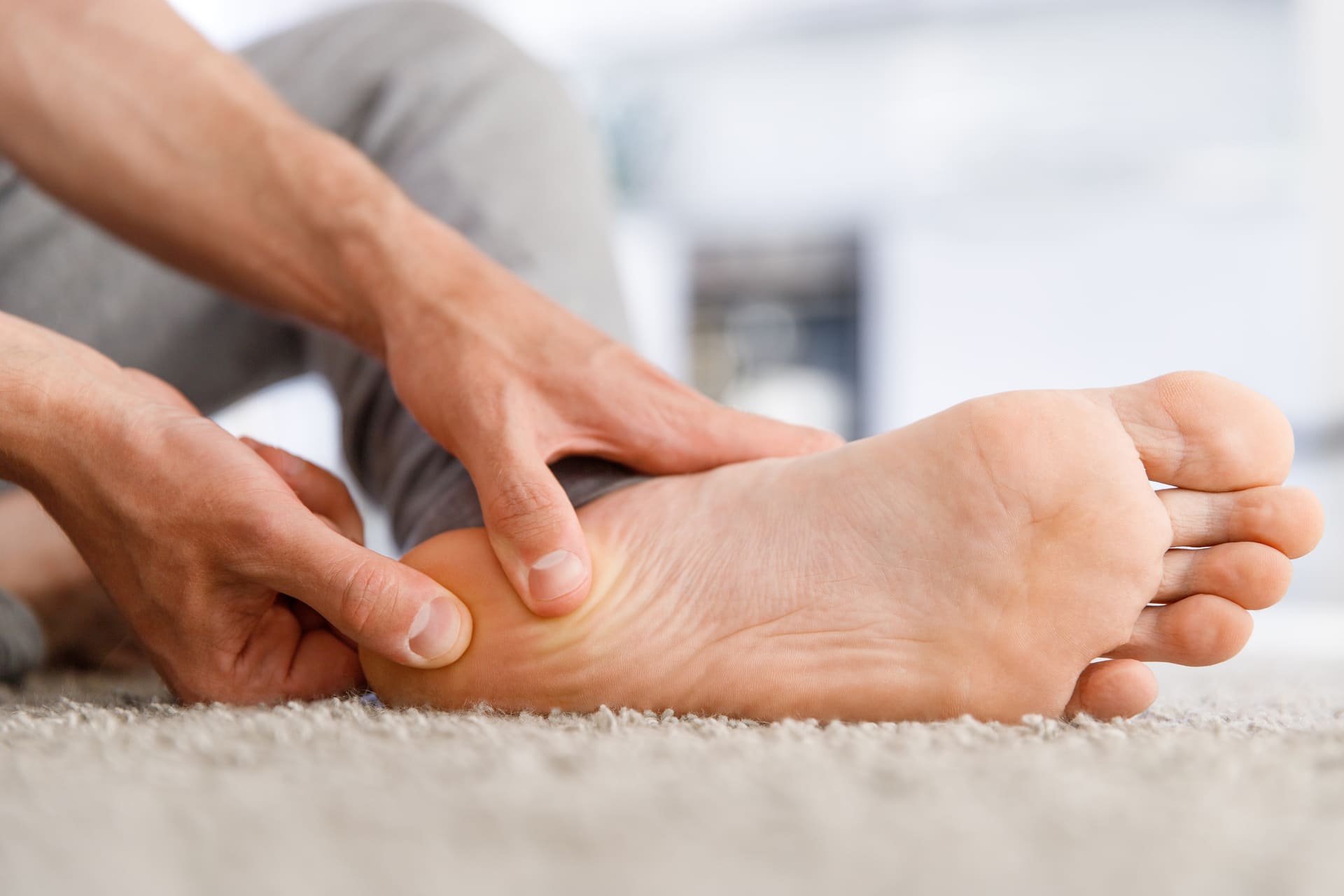
What is Plantar Fasciitis?
Plantar fasciitis is the most common cause of heel pain, affecting approximately 1 in 10 people during their lifetime. The plantar fascia is a thick band of tissue that runs along the bottom of your foot, connecting your heel bone to your toes. It acts like a shock absorber and supports the arch of your foot.
When the plantar fascia becomes irritated and develops microscopic tears—usually where it attaches to the heel bone—it causes the characteristic heel pain of plantar fasciitis. Despite its name ending in “-itis” (which suggests inflammation), plantar fasciitis is more accurately described as a degenerative condition involving collagen breakdown and tissue changes rather than active inflammation.
What Causes Plantar Fasciitis?
While the exact cause isn’t completely understood, plantar fasciitis develops from repetitive mechanical stress on the plantar fascia, leading to microscopic tears and tissue degeneration.
Risk Factors
Several factors increase your risk of developing plantar fasciitis:
-
Limited ankle flexibility: Tight calf muscles and reduced ankle motion significantly increase risk. People with less than 10 degrees of ankle dorsiflexion (ability to pull the foot upward) have progressively higher risk of plantar fasciitis.
-
Excess body weight: Being overweight or obese is strongly associated with plantar fasciitis. People with a body mass index (BMI) over 30 have more than 5 times the risk compared to those with normal BMI.
-
Prolonged standing: Jobs that require spending most of the workday on your feet increase risk more than 3-fold.
-
Age: Most common in people aged 45 to 64 years.
-
Gender: Women are affected slightly more often than men.
-
Foot structure: Both flat feet (excessive pronation) and high arches can contribute.
-
Running and high-impact activities: Especially when suddenly increasing distance or intensity.
What Are the Symptoms?
Plantar fasciitis causes distinctive symptoms that typically develop gradually:
Classic Pain Pattern
-
Sharp, stabbing pain in the bottom of the heel, usually on the inner side.
-
Pain is worst with the first steps in the morning or after sitting for prolonged periods—this is the hallmark symptom.
-
Pain typically improves after a few minutes of walking as the tissue “warms up”.
-
Pain often worsens at the end of the day after prolonged standing or activity.
-
Sensation of “walking on a pebble” or tenderness in the heel.
What Makes It Worse
-
Walking, especially for long periods (91% of patients).
-
Climbing stairs.
-
Standing for extended periods.
-
Going barefoot or wearing flat shoes without support.
-
Stretching the toes upward.
What Makes It Better
-
Removing shoes and massaging the foot.
-
Wearing supportive shoes with good arch support.
How is Plantar Fasciitis Diagnosed?
Your foot and ankle surgeon can usually diagnose plantar fasciitis based on your medical history and physical examination—no special tests are typically needed initially.
Medical History
Your doctor will ask about:
-
Your symptoms and when they started.
-
The pattern of your pain (especially morning pain).
-
Your activity level and occupation.
-
Your footwear.
-
Previous foot problems.
Physical Examination
Your doctor will:
-
Press on specific areas of your heel to locate tenderness (typically at the inner, bottom part of the heel).
-
Check your ankle flexibility and range of motion.
-
Examine your foot structure and walking pattern.
Imaging Studies
X-rays, ultrasound, or MRI are usually not needed for initial diagnosis but may be ordered if:
-
Symptoms don’t improve with treatment after several months.
-
Your doctor suspects another problem (such as a stress fracture).
Non-Surgical Treatment Options
The good news is that most people improve with conservative (non-surgical) treatments. With proper treatment, approximately 80% of patients improve within 12 months. However, symptoms can persist—some patients still have symptoms at 1 year, though many eventually resolve.
Initial Self-Care Measures
-
Rest and activity modification: Avoid or reduce activities that worsen pain.
-
Ice massage: Apply ice to the heel for 15-20 minutes several times daily.
-
Proper footwear: Wear supportive shoes with good arch support and cushioning; avoid flat shoes, flip-flops, and going barefoot.
-
Over-the-counter pain relievers: Ibuprofen or naproxen may help with pain (though studies show limited benefit).
Stretching Exercises
Stretching is one of the most effective treatments for plantar fasciitis. Studies show that home stretching programs can significantly reduce pain—by an average of 23-28 points on a 100-point pain scale.
Key stretches include:
-
Calf stretches: Stretching the gastrocnemius and soleus muscles.
-
Plantar fascia stretches: Pulling your toes upward while seated.
-
Perform stretches regularly, especially before getting out of bed in the morning.
Orthotics and Shoe Inserts
Foot orthoses (shoe inserts) help reduce strain on the plantar fascia and decrease pressure on the heel. Research shows that:
-
Both custom and prefabricated (over-the-counter) orthoses can reduce pain.
-
Prefabricated orthoses work just as well as expensive custom orthoses for most people.
-
Metatarsal pads placed just behind the ball of the foot can help spread the bones and reduce pressure.
Physical Therapy
A physical therapist can guide you through:
-
Specific stretching and strengthening exercises.
-
Manual therapy techniques.
-
Gait training.
-
Activity modifications.
Studies show that home stretching works as well as formal physical therapy for many patients.
Night Splints
Night splints hold your ankle and toes in a stretched position while you sleep. In patients with chronic plantar fasciitis (symptoms lasting more than 6 months), night splints can provide significant improvement, though only about one-third of patients become completely pain-free.
Injections
-
Corticosteroid injections: Can provide short-term pain relief (less than 1 month) but the benefit typically doesn’t last beyond 6 weeks.
-
Platelet-rich plasma (PRP): Some doctors offer PRP injections, though evidence is mixed.
Important: Corticosteroid injections carry a risk of plantar fascia rupture and fat pad atrophy, so they should be used judiciously.
When to Consider Surgery
Surgery is considered only for patients who:
-
Have persistent, severe symptoms despite at least 6-12 months of appropriate conservative treatment.
-
Have symptoms that significantly limit daily activities and quality of life.
-
Are motivated to follow post-operative rehabilitation.
Approximately 10% of patients with plantar fasciitis do not respond adequately to conservative treatment and may benefit from surgery.
Minimally Invasive Surgical Treatment Options
Modern surgical techniques for plantar fasciitis use minimally invasive approaches that offer significant advantages over traditional open surgery, including smaller incisions, less pain, faster recovery, and reduced complication rates.
Frequently Asked Questions
What is plantar fasciitis and why does it cause heel pain?
Plantar fasciitis occurs when the plantar fascia becomes irritated or develops fascia inflammation, leading to stabbing or burning heel pain, especially during the first steps in the morning.
What are the best plantar fasciitis treatment options?
The best plantar fasciitis treatment may include stretching, orthotics, footwear changes, physical therapy, and activity modification. A plantar fascia specialist will tailor treatment based on symptom severity.
When is plantar fasciitis surgery necessary?
Plantar fasciitis surgery is considered when conservative treatments fail after several months and heel pain continues to interfere with daily activities or mobility.
How long does recovery take after plantar fasciitis surgery?
Recovery varies depending on the procedure, but many patients gradually return to normal activities over several weeks while following a structured rehabilitation plan.
How do I find the best plantar fasciitis treatment Miami offers?
Consulting an experienced plantar fascia specialist ensures accurate diagnosis and access to advanced treatments, including minimally invasive procedures when needed.
Medical Disclaimer
The information provided on this website is intended for general educational and informational purposes only and is not a substitute for professional medical advice, diagnosis, or treatment. The content may not be applicable to all patients or clinical situations. Individual conditions, circumstances, and responses to treatment can vary significantly. Always seek the advice of a qualified healthcare professional regarding any medical condition, symptoms, or treatment options. Never disregard or delay seeking medical advice because of information found on this website.