What Is Hallux Rigidus?
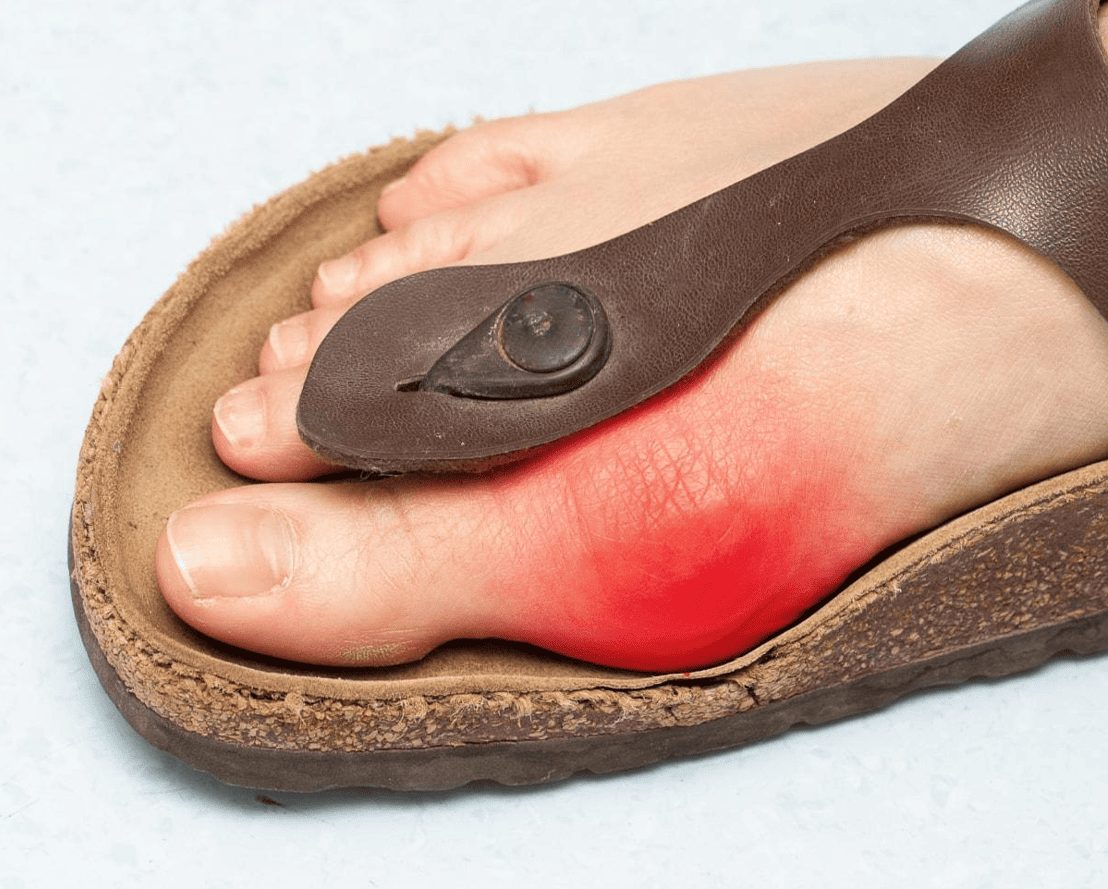
Hallux rigidus — literally ‘stiff big toe’ — is degenerative arthritis of the first metatarsophalangeal (MTP) joint: the large knuckle at the base of the big toe. It is the most common arthritic condition of the foot, and the second most common pathology of the first ray after hallux valgus (bunion). The condition progresses through increasing joint space narrowing, cartilage destruction, and bone spur (osteophyte) formation, leading to pain, stiffness, swelling, and eventually near-complete loss of joint motion.
The big toe joint plays a critical role in normal walking and running. During the push-off phase of every step, the first MTP joint dorsiflexes to around 60–70 degrees. When arthritis restricts this movement, the body compensates through altered gait — placing increased stress on adjacent joints, the knee, hip, and lower back. Left untreated, progressive hallux rigidus causes worsening pain, increasing difficulty with footwear, and significant limitation of physical activity.
Grading Hallux Rigidus: What Stage Are You?
Hallux rigidus is graded on a scale of 1 to 4 (the Coughlin and Shurnas classification system). The grade determines whether joint-preserving procedures or definitive fusion is most appropriate.
| Grade | Joint Findings | Symptoms | Surgical Option |
| 1 | Mild spurring; minimal cartilage loss; good range of motion | Mild stiffness and intermittent pain with activity | Cheilectomy (spur removal) |
| 2 | Moderate spurring; up to 25% cartilage loss; reduced motion | Moderate pain; stiffness limiting activity | Cheilectomy ± osteotomy |
| 3 | Severe spurring; >25% cartilage loss; significantly limited motion | Constant pain; significant functional limitation | Fusion (arthrodesis) — gold standard |
| 4 | Near-complete or complete cartilage destruction; minimal motion | Severe pain; joint effectively non-functional | Fusion — definitive treatment |
Grades 3 and 4 hallux rigidus — where significant cartilage destruction has occurred and conservative or joint-preserving surgery is unlikely to provide lasting relief — are the primary indications for first MTP joint fusion. First MTP arthrodesis is widely recognised as the gold-standard surgical treatment for advanced hallux rigidus.
Before Surgery: Conservative Management
Conservative management should always be the first line of treatment and can provide meaningful symptom relief, particularly in early-stage disease. The goal is pain reduction, activity modification, and slowing of deformity progression.
- Footwear modification: stiff-soled shoes with a rocker-bottom reduce the dorsiflexion demand on the MTP joint during walking, significantly reducing pain with every step
- Foot orthoses / insoles: a Morton’s extension or carbon-fibre forefoot plate limits big toe dorsiflexion and offloads the arthritic joint
- Anti-inflammatory medication: oral NSAIDs for acute flares; topical agents for longer-term use
- Activity modification: avoiding high-impact loading, prolonged hills, and deep toe dorsiflexion during the symptomatic phase
Conservative treatment is least effective for Grades 3 and 4 disease, where cartilage destruction is irreversible and the joint can no longer be offloaded into a pain-free range. When conservative measures no longer provide adequate symptom control, surgical assessment is appropriate.
Key Evidence
| 95–96%
fusion rate with MIS approach — equal to open surgery |
96.7%
of patients walk without restriction or pain after fusion |
~5 years
mean follow-up in young patient sport return study (PubMed) |
Sources: Duggan et al., Foot & Ankle International 2024; patient survey data — Journal of Foot & Ankle Surgery 2023; PubMed return-to-sport study (mean 5.1-year follow-up)
First MTP Joint Fusion: The Gold-Standard Treatment
First metatarsophalangeal joint arthrodesis (fusion) permanently eliminates motion at the arthritic joint by allowing the metatarsal and proximal phalanx bones to grow together into a single solid structure, stabilised with surgical screws and/or a plate. By eliminating the painful bone-on-bone movement, fusion reliably and durably resolves the pain of advanced hallux rigidus.
A common concern patients express is that fusing the big toe joint will leave them significantly disabled. The clinical reality is quite different. Most patients report that eliminating the arthritic pain far outweighs the loss of motion — particularly since by the time fusion is indicated, most patients have already lost the majority of their functional joint motion to the arthritis itself. Normal walking, hiking, cycling, swimming, and in many cases running are entirely achievable after a well-positioned fusion.
The position at which the joint is fused is the single most important technical decision in the procedure. The ideal position is 10–15 degrees of dorsiflexion relative to the first metatarsal — replicating the push-off position — combined with neutral to slight valgus alignment. A well-positioned fusion allows comfortable walking in normal footwear; a poorly positioned fusion creates new biomechanical problems.
Fusion is indicated for Grades 3 and 4 hallux rigidus, failed previous joint-preserving surgery, and in patients with hallux rigidus combined with significant valgus deformity (rigido-valgus). It is also increasingly preferred over joint replacement in active patients, given fusion’s superior long-term durability compared to currently available arthroplasty implants.
Minimally Invasive (Keyhole) First MTP Fusion
Advances in minimally invasive surgical techniques have transformed the way first MTP joint fusion can be performed. Rather than requiring a large dorsal incision along the first ray, the keyhole approach uses 2–3 small percutaneous incisions of 5–8mm, through which a specialised rotary burr — guided by real-time fluoroscopic X-ray imaging — prepares the joint surfaces and the fusion is then secured with screws placed through similarly small incisions.
How Is the Procedure Performed?
The patient is positioned supine under general or regional anaesthesia. Small stab incisions are made over the first MTP joint. A percutaneous burr is used under continuous fluoroscopic guidance to carefully remove the joint cartilage and prepare the subchondral bone surfaces — the critical step that creates the biological environment for the bones to grow together. The joint is then positioned at the ideal fusion angle, and one or two compression screws (and in some techniques a small plate) are inserted percutaneously to hold the position while fusion consolidates. The entire procedure typically takes 45–75 minutes and is performed as a day case.
Why Choose Minimally Invasive?
The evidence for MIS first MTP fusion is compelling and growing:
- Equivalent fusion rates: a 2024 retrospective comparative study published in Foot & Ankle International (Duggan et al.) found fusion rates of 96% for MIS versus 95% for open surgery in 67 procedures — no statistically significant difference
- Equivalent functional outcomes: AOFAS and Manchester Oxford Foot Questionnaire (MOXFQ) scores improve comparably between MIS and open approaches at follow-up
- Reduced wound complications: the smaller incisions significantly reduce the risk of wound-related complications — a meaningful advantage in forefoot surgery where wound healing can be challenging
- Less post-operative pain: reduced soft tissue dissection translates to less post-operative tissue trauma and pain
- Minimal scarring: 2–3 small puncture-like scars compared to the dorsal scar of open surgery — a cosmetically and functionally meaningful difference
- Earlier mobilisation: some evidence supports faster early weight-bearing and functional recovery with the MIS approach
A systematic review published in Foot & Ankle Surgery concluded that minimally invasive MTP I arthrodesis is a promising technique with comparable clinical and radiological outcomes and complication rates to open surgery — with the potential added benefit of reduced wound complications.
MIS vs. Open First MTP Fusion: At a Glance
| MIS Keyhole Fusion | Traditional Open Fusion | |
| Incision | 2–3 small percutaneous incisions (5–8mm) | One larger dorsal incision (~4–6cm) |
| Bone preparation | Percutaneous burr under fluoroscopic guidance | Direct visualisation with saw and curettes |
| Fusion rate | 95–96% (Duggan et al., Foot & Ankle Int. 2024) | 95% (same study; no significant difference) |
| Wound complications | Lower — reduced soft tissue disruption | Higher — larger incision, more dissection |
| Post-op pain | Generally lower due to reduced tissue trauma | More post-operative soft tissue pain typical |
| Scarring | Minimal — 2–3 small puncture-like scars | Dorsal scar along first ray |
| Recovery speed | Comparable; some evidence of faster early function | Standard recovery trajectory |
| Functional outcomes | Comparable AOFAS and MOXFQ scores at follow-up | Well-established long-term data |
Return to Sport and Physical Activity After Hallux Fusion
One of the most persistent misconceptions about first MTP joint fusion is that it will permanently prevent patients from returning to sport or an active lifestyle. The published evidence strongly contradicts this. The big toe joint’s role in sport is primarily one of push-off dorsiflexion — a motion that, after fusion, is partially compensated by increased motion at the interphalangeal (IP) joint and the ankle. Most patients adapt remarkably well.
Key evidence: a study of active patients aged 18–55 years (mean follow-up 5.1 years) published on PubMed found that patients were able to participate in a wide variety of sports and physical activities after first MTP joint arthrodesis, with most patients satisfied with their activity level. A separate patient survey study found that 96.7% of patients could walk without restriction or pain, 98.3% walked at a normal pace, and 95% reported that loss of big toe motion did not affect their daily function.
A 2025 study from the Hospital for Special Surgery (Seif El Masry et al.) comparing return to sports after first MTP arthrodesis, Lapidus procedure, and Lisfranc arthrodesis confirmed high rates of return to physical activity following first MTP fusion, supporting its use in younger, more active patients.
Activity Guide After First MTP Fusion
| Activity | Status | Typical Timeframe | Notes |
| Walking (flat ground) | ✔ Fully expected | 3–4 months | Near-normal gait achievable in most patients; 96.7% walk without restrictions (patient survey data) |
| Swimming | ✔ Recommended | 8–12 weeks | No load on the fusion site; excellent early cardiovascular conditioning |
| Cycling (stationary/road) | ✔ Recommended | 8–12 weeks | Low MTP joint stress; widely practised post-fusion |
| Hiking | ✔ Generally permitted | 4–6 months | Stiff-soled footwear reduces MTP joint load during push-off |
| Golf | ✔ Generally permitted | 4–6 months | Well-tolerated; rocker-bottom or stiff sole facilitates swing |
| Gym / upper body training | ✔ Unrestricted | From week 2 | Upper body and seated exercises unrestricted throughout recovery |
| Running / jogging | ✔ Possible for many | 6–12 months | Normal running is possible after fusion; IP joint adapts to push-off. Gait modification expected |
| Racquet sports / tennis | ✔/⚠ With adaptation | 9–12 months | Possible with appropriate footwear; lateral cutting demands assessed individually |
| Football / field sports | ⚠ Case by case | 12 months+ | Possible in selected patients with appropriate footwear; pivoting and sprint demands vary by position |
| High-impact jumping sports | ⚠ With caution | 12 months+ | MTP motion not required for most jumping; IP joint absorbs compensatory load — monitor |
Running After Hallux Fusion
Running deserves specific mention, as it is frequently cited as a concern by active patients. The published evidence is reassuring: normal running is physiologically achievable after first MTP fusion. During running, the metatarsophalangeal joint reaches its maximum dorsiflexion — a motion that after fusion is compensated by the interphalangeal joint, which adapts to take on increased dorsiflexion over time.
A landmark technical note published in PubMed states explicitly: ‘Normal walking and running are possible after MTP1 fusion, the first ray mobility being essentially in the interphalangeal joint with a compensatory hypermobility in dorsal flexion.’ Patients with pre-existing interphalangeal joint hypermobility adapt fastest; others adapt over a longer period as the IP joint gradually accommodates the new loading pattern.
The expectation for running after hallux fusion is not that gait will be identical to before — there will be a period of adaptation and some gait modification — but that running is achievable for most active patients with appropriate rehabilitation and footwear.
Footwear Considerations for Sport
Footwear plays an important role in activity after first MTP fusion. Key principles:
- Stiff or rocker-bottom soles: reduce the load on the fusion site during push-off and facilitate a more natural gait pattern during early recovery and beyond
- Carbon-fibre forefoot plates: inserts that limit MTP joint flexion are particularly useful for running and sport return
- Sport-specific footwear: most modern athletic shoes accommodate a fused MTP joint well; cycling shoes and ski boots may actually be more comfortable post-fusion than pre-operatively, as they limit MTP dorsiflexion
- Heel height: a small heel elevation (1–2cm) naturally reduces the dorsiflexion demand on the fusion site — useful in the recovery period
Recovery Timeline
| Phase | Timeframe | Weight-bearing | Key Milestones |
| Post-op | Weeks 0–2 | Flat rigid-soled shoe; heel weight-bearing | Rest and elevation; dressings managed; wound check |
| Early healing | Weeks 2–6 | Progressive weight-bearing in stiff shoe | Swelling reducing; swimming from ~8 weeks once wounds healed |
| Bone consolidation | Weeks 6–10 | Transitioning to supportive footwear | X-ray confirms early fusion; cycling and low-impact gym introduced |
| Active rehab | Weeks 10–16 | Normal footwear (stiff sole advised) | Walking distance building; physiotherapy for gait and strength |
| Return to activity | Months 4–6 | Full function in appropriate shoes | Hiking and golf; most low-impact sport cleared |
| Sport return | Months 6–12 | Full activity | Running, racquet sports, and high-demand sport assessed individually |
Most patients describe a meaningful functional improvement at 3–4 months and continued gains throughout the first year. The interphalangeal joint adaptation — which enables running and higher-demand activity — is a gradual process that continues for 6–18 months post-operatively.
Frequently Asked Questions
What is hallux rigidus and how do I know if I have it?
Hallux rigidus is arthritis of the big toe joint (first MTP joint), causing progressive pain, stiffness, and swelling. Key indicators are pain and stiffness at the base of the big toe that is worse with activity — particularly walking uphill, running, or wearing heeled shoes — and a visible or palpable bony lump on the top of the joint. A clinical assessment and weight-bearing X-rays are required to confirm the diagnosis and grade the severity.
Will I be able to walk normally after first MTP fusion?
Yes, for the vast majority of patients. Published patient survey data shows 96.7% of patients walk without restriction or pain and 98.3% walk at a normal pace after fusion. In appropriate footwear — particularly shoes with a stiff or rocker-bottom sole — most patients develop a comfortable, well-adapted gait within 3–4 months.
What is the advantage of minimally invasive (keyhole) fusion over open surgery?
Minimally invasive first MTP fusion delivers the same fusion rate and functional outcomes as open surgery through 2–3 small puncture-like incisions rather than a large dorsal incision. The advantages are reduced wound complications, less post-operative soft tissue pain, minimal scarring, and potentially faster early recovery. The 2024 comparative study in Foot & Ankle International found no significant difference in fusion rates (96% MIS vs 95% open).
Can I run after big toe fusion?
Yes — normal running is achievable after first MTP joint fusion for most patients. The interphalangeal joint gradually adapts to take on the push-off dorsiflexion role previously performed by the MTP joint. This adaptation takes time — most patients are cleared for running at 6–12 months — and gait modification during the adaptation period is expected. Carbon-fibre insoles and appropriate running footwear support the transition.
Will fusion affect my ability to wear normal shoes?
Most patients wear a wide range of normal footwear comfortably after fusion. Athletic shoes, work shoes, and casual footwear are generally well-tolerated. A stiff sole or rocker-bottom modification significantly improves comfort. Very high heels and pointed-toe dress shoes that force the toe into extreme positions are generally impractical. Some patients find post-fusion footwear actually more comfortable than their pre-operative shoes, as the pain of the arthritic joint is eliminated.
How long does it take for the fusion to heal?
Radiographic evidence of bone healing is typically visible at 6–10 weeks. Bony union is usually confirmed at 3 months. Full biological consolidation of the fusion continues for 6–12 months. Activity progression is guided by X-ray confirmation of healing at each stage rather than calendar time alone.
Summary
Hallux rigidus is a progressive condition that, in its advanced stages, reliably responds to first MTP joint fusion — the gold-standard surgical treatment with consistently high fusion rates, excellent pain relief, and strong functional outcomes. The minimally invasive keyhole approach delivers the same clinical results through tiny incisions, with the added benefits of reduced wound complications, less post-operative pain, and minimal scarring.
The activity outlook after hallux fusion is far more positive than many patients expect. Walking, cycling, swimming, hiking, golf, and — for most active patients — running are achievable outcomes. The key is a well-positioned fusion, structured rehabilitation, appropriate footwear, and a graduated return-to-sport programme guided by your orthopedic foot and ankle specialist.
This article is for educational purposes only and does not constitute medical advice. For assessment and management of big toe arthritis or hallux rigidus, consult a qualified orthopedic foot and ankle specialist.