If you’ve been dealing with foot pain — whether from plantar fasciitis, flat feet, bunions, or just long days on your feet — chances are someone has told you that custom orthotics are the answer. And at $300 to $800 a pair, they certainly sound like a serious medical intervention.
But here’s a question most providers won’t ask on your behalf: are custom orthotics actually better than a well-chosen over-the-counter insole?
As an orthopedic surgeon who specializes exclusively in foot and ankle conditions, I believe you deserve an honest, evidence-based answer. And the research may surprise you.
What Are Custom Orthotics?
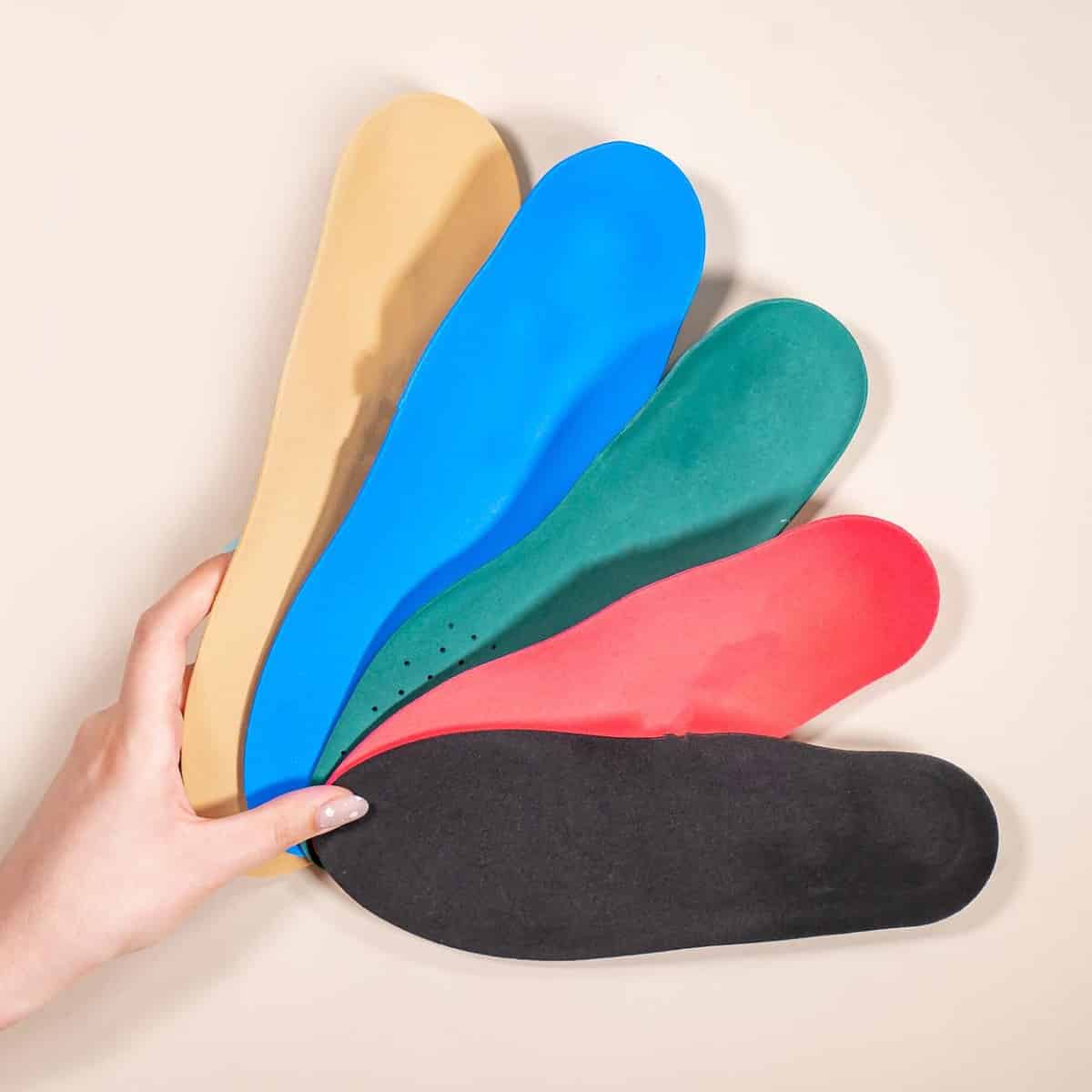
Custom orthotics are contoured shoe inserts fabricated from a mold, plaster cast, or 3D scan of your individual foot. They are typically prescribed by a podiatrist, orthopedist, or physical therapist and manufactured from medical-grade materials such as polypropylene, carbon fiber, or EVA foam. The fitting process usually involves a clinical assessment of your gait, foot structure, and specific symptoms.
Over-the-counter (OTC) orthotics — also called prefabricated insoles — are mass-produced inserts available in pharmacies, sporting goods stores, and online. They come in standard sizes and configurations, with options ranging from basic gel cushions to semi-rigid arch supports specifically designed for conditions like plantar fasciitis or flat feet.
On the surface, custom orthotics seem like the obvious winner. They’re personalized, right? The analogy you’ll hear most often is prescription eyeglasses versus drugstore readers. But that analogy breaks down when you look at what the actual studies show.
What Does the Research Say? A Look at the Evidence
The scientific literature on this question is surprisingly clear — and it does not favor custom orthotics for the vast majority of common foot conditions.
Systematic Reviews and Meta-Analyses
A landmark systematic review and meta-analysis published in Foot & Ankle International by Collins et al. (2007) examined 23 randomized controlled trials on foot orthoses for lower limb overuse conditions. One of the study’s most notable findings was the absence of any meaningful difference in outcomes between custom and prefabricated orthotics. The pooled data and individual study results both pointed to the same conclusion: custom devices offered no differential benefit.
A comprehensive review conducted by the Canadian Agency for Drugs and Technologies in Health (CADTH) in 2019 evaluated the comparative clinical effectiveness and cost-effectiveness of custom-made foot orthoses versus prefabricated alternatives. Their conclusion was unambiguous: there was no difference between custom and prefabricated orthoses for pain reduction or functional improvement after short-term (6 weeks), medium-term (12 weeks), or long-term (12 months) treatment in patients with plantar heel pain. Self-reported recovery and patient satisfaction were also equivalent between the two groups.
The Pfeffer Study: A Turning Point
One of the most influential studies in this debate was the multicenter randomized controlled trial by Pfeffer et al., published in Foot & Ankle International in 1999. This study enrolled 236 patients with plantar fasciitis across 15 orthopedic foot and ankle centers. Patients were randomized to five treatment groups: stretching alone, or stretching combined with one of four different inserts (silicone heel pad, rubber heel cup, felt pad, or custom polypropylene orthotic).
The results were striking. The improvement rates were: silicone insert (95%), rubber insert (88%), felt pad (81%), stretching alone (72%), and custom orthotic (68%). Not only did the custom orthotics fail to outperform the prefabricated options — they actually produced the lowest improvement rate of all five groups. When the three prefabricated insert groups were combined, their improvement was statistically superior to the custom orthotic group (p = 0.0074).
Harvard Health’s Summary
In a review of 20 randomized controlled studies encompassing approximately 1,800 patients and eight different types of orthotics, researchers found no difference in short-term pain relief between custom-made and store-bought orthotics. The analysis also found that orthotics in general were not demonstrably superior to other conservative treatments such as stretching, heel braces, or night splints for heel pain.
The Cochrane Review
The Cochrane Collaboration — widely considered the gold standard for evidence-based medical reviews — examined custom orthoses across multiple foot conditions including plantar fasciitis, pes cavus, hallux valgus, and arthritis. While custom orthotics showed modest benefit compared to sham (placebo) devices for some conditions, there was no evidence that custom orthoses were more effective than appropriately selected prefabricated alternatives.
| The Bottom Line from the Research
Multiple high-quality systematic reviews, meta-analyses, and randomized controlled trials consistently show no significant advantage of custom orthotics over appropriately selected over-the-counter insoles for common foot conditions. Custom devices cost 5–10 times more but do not deliver proportionally better outcomes. |
Why the Myth Persists
If the evidence is this clear, why are custom orthotics still so widely recommended and prescribed? Several factors contribute to the persistence of this practice.
Financial incentive: Custom orthotics represent a significant revenue stream for many practices. A single pair can generate $300–$800 in revenue, compared to the nominal profit from recommending an over-the-counter product. This creates an inherent bias — even among well-intentioned clinicians — toward favoring custom devices.
The placebo effect and perceived value: When patients invest hundreds of dollars in a personalized medical device, there is a strong psychological expectation of improvement. This is not to say the relief isn’t real — the placebo effect produces genuine physiological changes. However, research suggests patients get similar levels of relief from far less expensive options.
Tradition and training: Custom orthotics have been a staple of podiatric and orthopedic training for decades. Many clinicians were taught that custom devices are the “gold standard” before the comparative research was available, and practice patterns can be slow to change even when new evidence emerges.
Outdated analogies: The “prescription glasses vs. drugstore readers” comparison is deeply misleading. Vision correction requires precise optical measurements unique to each eye. Foot support operates on fundamentally different biomechanical principles — redistributing pressure and providing arch support — that do not require the same degree of individualization for most patients.
When Custom Orthotics May Be Justified
To be clear, I am not saying custom orthotics are never appropriate. There are specific clinical scenarios where custom devices may offer meaningful advantages over prefabricated insoles:
Significant structural foot deformities — such as severe flatfoot deformity, Charcot midfoot collapse, or metatarsal fractures that have healed with significant displacement — may require the precise contouring that only a custom mold can provide.
Diabetic neuropathy with high ulceration risk — patients with diabetes who have lost protective sensation in their feet, particularly those with a history of foot ulceration, benefit from custom total-contact orthoses. Medicare recognizes this with specific coverage for diabetic shoes and orthotics based on evidence demonstrating reduced ulceration rates.
Rheumatoid arthritis and juvenile idiopathic arthritis — the Cochrane review found modest evidence supporting custom orthotics in these populations, which often present with complex, multi-joint deformities that standard insoles cannot adequately accommodate.
Failed trial of quality OTC orthotics — if a patient has genuinely tried a well-selected over-the-counter orthotic for an appropriate duration and continues to have symptoms, custom devices become a reasonable next step.
For the vast majority of patients with common conditions such as plantar fasciitis, mild-to-moderate flat feet, metatarsalgia, or general foot fatigue, the evidence does not support going directly to custom orthotics.
How to Choose the Right Over-the-Counter Orthotic
Not all OTC insoles are created equal. A flimsy gel pad from the dollar store is not equivalent to a properly designed prefabricated arch support. The key is selecting the right type for your foot structure and condition:
For plantar fasciitis and heel pain: Look for a semi-rigid insole with structured arch support and a deep heel cup. The heel cup helps stabilize the calcaneus and reduces strain on the plantar fascia during weight-bearing. Avoid purely cushioning insoles, which feel comfortable but do not address the underlying biomechanics.
For flat feet (pes planus): Choose a device with a firm medial arch support that maintains contact with the midfoot. The goal is to redistribute force away from overstressed structures. Semi-rigid materials like EVA or thermoplastic polyurethane provide better long-term support than soft foam. My preference is for the Aetrex L2220.
For high arches (pes cavus): Select an insole with a recessed area under the first metatarsal head. An excessively high arch support in a cavus foot can actually increase pressure on the lateral column and worsen symptoms. My preference is for the Foot Scientific Type 3.
For metatarsalgia (ball-of-foot pain): A metatarsal pad placed just proximal to the metatarsal heads can effectively offload pressure. Many quality OTC insoles come with integrated met pads or allow for customizable placement. My preference is for Aetrex L2205
| Pro Tip from Dr. Vulcano
Before investing in any orthotic, start with properly fitted, supportive shoes appropriate for your activity. You would be surprised how many patients find their foot pain resolves simply by switching from worn-out or poorly fitting footwear to a quality, properly sized shoe. Add an over-the-counter orthotic only if shoe changes alone are insufficient. |
The Cost Comparison: What You’re Really Paying For
The financial reality is worth examining candidly. Custom orthotics typically cost between $300 and $800 per pair, and most insurance plans do not cover them for common conditions like plantar fasciitis. Quality over-the-counter insoles range from $25 to $60 per pair.
Even accounting for the greater durability of custom devices (which may last 2–4 years versus 6–12 months for OTC insoles), the cost difference over time remains substantial. A patient replacing a $40 OTC insole annually for four years spends $160 — compared to $500 or more for a single pair of custom orthotics that deliver equivalent outcomes according to the best available evidence.
Importantly, no comparative cost-effectiveness studies have been published that demonstrate custom orthotics provide superior value for the typical patient with common foot complaints.
My Approach as a Foot and Ankle Surgeon
As a surgeon who has dedicated my career to evidence-based foot and ankle care, I believe my responsibility is to give you an honest assessment — not to recommend the most expensive option. In my practice in Miami, I follow a straightforward, stepwise approach:
Step 1: Ensure you are wearing properly fitted, supportive footwear appropriate for your activities.
Step 2: If symptoms persist, trial an appropriately selected over-the-counter orthotic matched to your foot type and condition, combined with a targeted stretching and strengthening program.
Step 3: If conservative measures including OTC orthotics fail after an adequate trial period (typically 6–8 weeks), consider custom orthotics for patients with specific structural deformities or complex medical conditions.
Step 4: If all conservative options have been exhausted, evaluate whether minimally invasive surgical intervention may provide a more definitive solution. Many foot conditions that historically required lengthy recoveries can now be addressed with advanced percutaneous techniques that allow for early weight-bearing and faster return to activity.
This stepwise approach is supported by the evidence, respects your time and finances, and ensures that every treatment we recommend has a sound scientific basis.
Frequently Asked Questions
These Q&As are structured for search engine featured snippets and voice assistant responses (AEO).
Q: Are custom orthotics better than over-the-counter insoles?
For most common foot conditions, no. Multiple systematic reviews and randomized controlled trials have found no significant difference in pain relief or functional improvement between custom and quality prefabricated orthotics. Custom orthotics may be appropriate for patients with severe structural deformities, diabetic neuropathy, or certain inflammatory arthritis conditions.
Q: Are custom orthotics worth the money?
For the average patient with plantar fasciitis, mild flat feet, or general foot discomfort, custom orthotics are unlikely to provide results superior to a well-selected over-the-counter insole. At $300–$800 versus $25–$60, the cost difference is significant, and the peer-reviewed research does not support a proportional benefit. If you have a complex structural deformity or medical condition such as diabetic neuropathy, custom orthotics may be a worthwhile investment.
Q: What is the best over-the-counter orthotic for plantar fasciitis?
Look for a semi-rigid insole with a structured arch support and a deep heel cup. The insert should provide firm support under the medial arch, not simply cushioning. Research shows that prefabricated insoles with these features perform as well as custom orthotics for plantar fasciitis in randomized trials.
Q: When should I get custom orthotics instead of store-bought insoles?
Custom orthotics are most justified in cases of severe foot deformity (such as Charcot foot or significantly displaced fracture malunion), diabetic neuropathy with ulceration risk, rheumatoid or juvenile idiopathic arthritis. For most other foot conditions, starting with a well-selected OTC insole is the evidence-based approach.
Q: Can orthotics cure plantar fasciitis?
Orthotics — whether custom or OTC — are one component of a comprehensive treatment plan for plantar fasciitis, not a cure in isolation. Plantar fasciitis often improves with a combination of appropriate footwear, orthotic support, calf and plantar fascia stretching, and activity modification. Most cases resolve within several months with conservative care. If symptoms persist despite comprehensive treatment, advanced options including minimally invasive surgical techniques are available.
References
- Collins N, Bisset L, McPoil T, Vicenzino B. Foot orthoses in lower limb overuse conditions: a systematic review and meta-analysis. Foot Ankle Int. 2007;28(3):396-412.
- Pfeffer G, Bacchetti P, Deland J, et al. Comparison of custom and prefabricated orthoses in the initial treatment of proximal plantar fasciitis. Foot Ankle Int. 1999;20(4):214-221.
- Canadian Agency for Drugs and Technologies in Health (CADTH). Custom-made foot orthoses versus prefabricated foot orthoses: A review of clinical effectiveness and cost-effectiveness. CADTH Rapid Response Report. 2019.
- Hawke F, Burns J, Radford JA, du Toit V. Custom-made foot orthoses for the treatment of foot pain. Cochrane Database Syst Rev. 2008;16(3):CD006801.
- Redmond AC, Landorf KB, Keenan AM. Contoured, prefabricated foot orthoses demonstrate comparable mechanical properties to contoured, customized foot orthoses: a plantar pressure study. J Foot Ankle Res. 2009;2:20.
- Baldassin V, Gomes CR, Beraldo PS. Effectiveness of prefabricated and customised foot orthoses made from low-cost foam for noncomplicated plantar fasciitis: A randomized controlled trial. Arch Phys Med Rehabil. 2009;90:701-706.
Experiencing Foot or Ankle Pain?
Dr. Ettore Vulcano is a board-certified orthopedic surgeon specializing in minimally invasive foot and ankle surgery in Miami Beach, FL. He is a pioneer of percutaneous surgical techniques in the United States, offering patients faster recovery times and early weight-bearing protocols.
Schedule a consultation to get an honest, evidence-based assessment of your condition.